
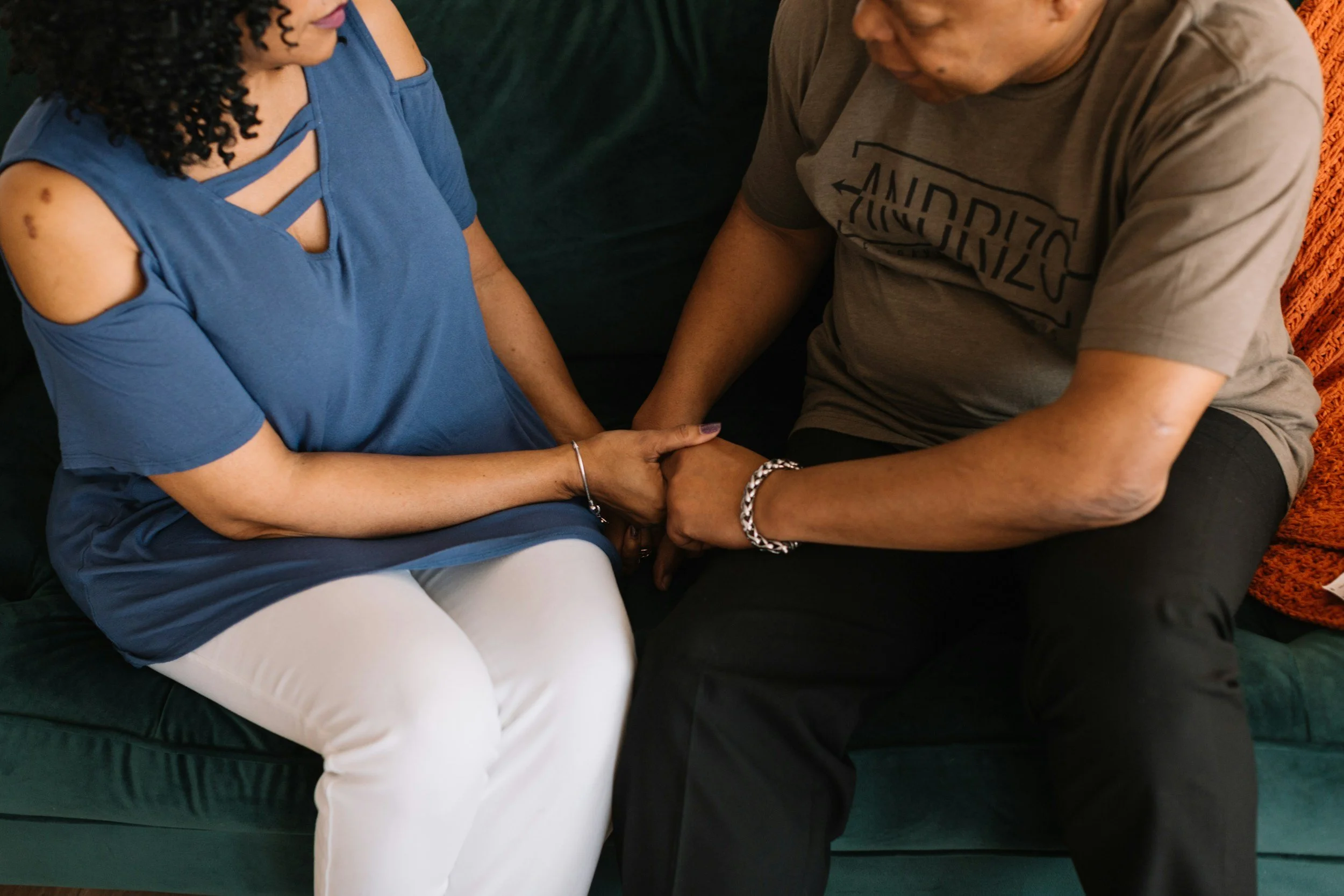
One of the questions I hear most from couples considering counseling is, "What makes Christian marriage counseling different from regular counseling?" Sometimes it comes with a worry underneath it: "Will a counselor who doesn't share our faith understand our marriage, or will they nudge us toward divorce?" Sometimes it comes from the other direction: "Will Christian counseling just be a sermon, or will it actually help?" Both are fair questions, and the answer matters, because the right fit makes a real difference in whether counseling helps.
What the two have in common
Good marriage counseling, Christian or not, should be done by a licensed professional who is trained specifically to work with couples, who uses an approach grounded in research, and who helps both spouses feel safe and heard. A good counselor works for the marriage, not for one spouse, and never makes either of you "the problem."
In my practice, that research-based approach is Emotionally Focused Therapy, one of the most researched approaches to couples therapy. Studies show about 90% of couples experience significant improvement, and 70–75% move from distress to recovery. Those are not "Christian" numbers or "secular" numbers. They are simply what the research shows about how couples heal.
What makes Christian marriage counseling different
The difference is not that one is professional and the other is spiritual. Done well, Christian marriage counseling is both. Here is what changes:
The starting point. Christian counseling begins with the belief that marriage is God's design, a covenant meant to be a safe haven and a secure base for both of you. Success means reconnection, the kind of intimacy God intended, and less fighting is only part of it.
Your faith is welcome in the room. Prayer, Scripture, forgiveness and grace are not set aside as off-limits. They become part of the healing, at the level the two of you are comfortable with. Faith is woven in, never forced.
Shared values about marriage. Many Christian couples want to honor their covenant and avoid divorce if at all possible. A Christian counselor shares that starting place, while still being honest about the situations that need safety and individual care first.
Science and Scripture together. I don't believe the two contradict each other. What attachment science shows us about how couples bond lines up beautifully with what Scripture teaches about love, protest, repair and forgiveness.
What the research says
Decades of research show that the relationship between you and your counselor is one of the strongest predictors of whether counseling helps. The American Psychological Association concluded it matters as much as, and probably more than, the specific method used. And in couples counseling, outcomes are best when both spouses feel safe and understood by their therapist.
Studies also show that counseling which honors a couple's faith works at least as well as secular counseling for emotional struggles, and does even more to strengthen spiritual well-being.
There is one more piece of research I share with couples often. Simply identifying as Christian doesn't protect a marriage. Today, evangelical couples divorce at nearly the same rate as non-religious couples. But couples who actively practice their faith together tell a different story: research from Harvard found regular church attenders were about 50% less likely to divorce, and shared prayer is one of the strongest predictors of a happy marriage. That is why, in my work, faith is not a label on the door. It is part of how couples learn to turn back toward each other.
Why Christian couples often wait to get help
In my doctoral research, I spent a long time studying what makes counseling different for Christian couples. Christian couples are more likely to go to their pastor first, to feel that needing counseling is a kind of moral failure, and to worry that a therapist will suggest divorce. Many wait longer to reach out because of it. They also tend to prefer a counselor who shares their beliefs and openly brings them into the work.
The research also shows something beautiful: a secure relationship with God can be a safe haven and a secure base, and it supports healthier connection in marriage. That is why, in my work, God attachment is one of three pathways to healing, alongside each spouse's own healing and the bond between the two of you.
I gathered these findings into a free resource, The Culture of Christian Couples. You can download it on my free resources page. It is especially helpful for pastors and counselors who walk alongside Christian couples.
How to choose a Christian marriage counselor
If you are looking for a Christian marriage counselor, here are a few questions worth asking:
Are you licensed? "Christian counselor" is not a protected title. Look for a state license (such as an LMHC, LMFT or psychologist) in addition to Christian training.
Are you trained to work with couples? Couples work is its own specialty. Ask what approach they use and how much of their practice is marriage counseling.
How do you bring faith into the work? You want a counselor who honors your faith without preaching at you, and who adjusts to where each of you is spiritually.
How do you screen for safety? A good counselor will ask early about affairs, abuse, addiction and mental health, because some situations need to be addressed before couples work can begin.
Do we both feel safe with you? Trust your instincts. Both of you should feel heard and respected.
How I work with couples
I have worked with couples for more than 30 years as a licensed mental health counselor. I am a Board Certified Professional Christian Counselor and an EFT-trained therapist, and my doctoral research studied Christian couples one year after a faith-integrated, emotionally focused marriage intensive. That research informs everything I do through my Intimacy For Life® Method.
If you would like to see how this works before reaching out, I walk couples through the Intimacy For Life® Method in my book, Naked and Exposed: Learning to Love Well Using the Intimacy For Life® Method in Your Marriage. It explains why couples get stuck in the same arguments, how faith and attachment science fit together, and practical steps the two of you can begin taking right away.
You can also hear me talk about marriage, faith and connection on my podcast, The Love Leading Podcast.
Many couples work with me through my Marriage Made Whole intensive: two focused days, one couple at a time, in my Tampa office, followed by six months of support so the change lasts. Couples come to me from across the Tampa Bay area and from out of town. Couples talk about seeking help for an average of four years before they find it, and you don't have to wait that long.
Let's talk
If you are wondering whether Christian marriage counseling is right for the two of you, let's talk. Book a free 30-minute consultation, and we will talk about where your marriage is, what you have already tried, and what kind of help makes the most sense.
Learn more about Christian counseling with Dr. Shanon →
Love well,
Dr Shanon
Frequently asked questions
Is Christian marriage counseling only for very religious couples?
No. Faith is woven in at the level each couple is comfortable with. Some couples pray together in session; others simply want a counselor who shares their values about marriage.
Will a Christian counselor tell us we can never separate?
A good Christian counselor shares your hope for the marriage, and is also honest about situations that need safety first, such as abuse, an ongoing affair, active addiction or a mental health crisis.
Is Christian counseling as effective as regular counseling?
Studies show counseling that honors a couple's faith works at least as well as secular counseling for emotional struggles, and does even more to strengthen spiritual well-being.
Do you have to be Christian to work with you?
My work is grounded in a faith-based view of marriage. Couples who want that are a great fit, and we can talk about fit in a free consultation.
How do we get started?
Book a free 30-minute consultation.